What to Do If Your Child Has Lice.
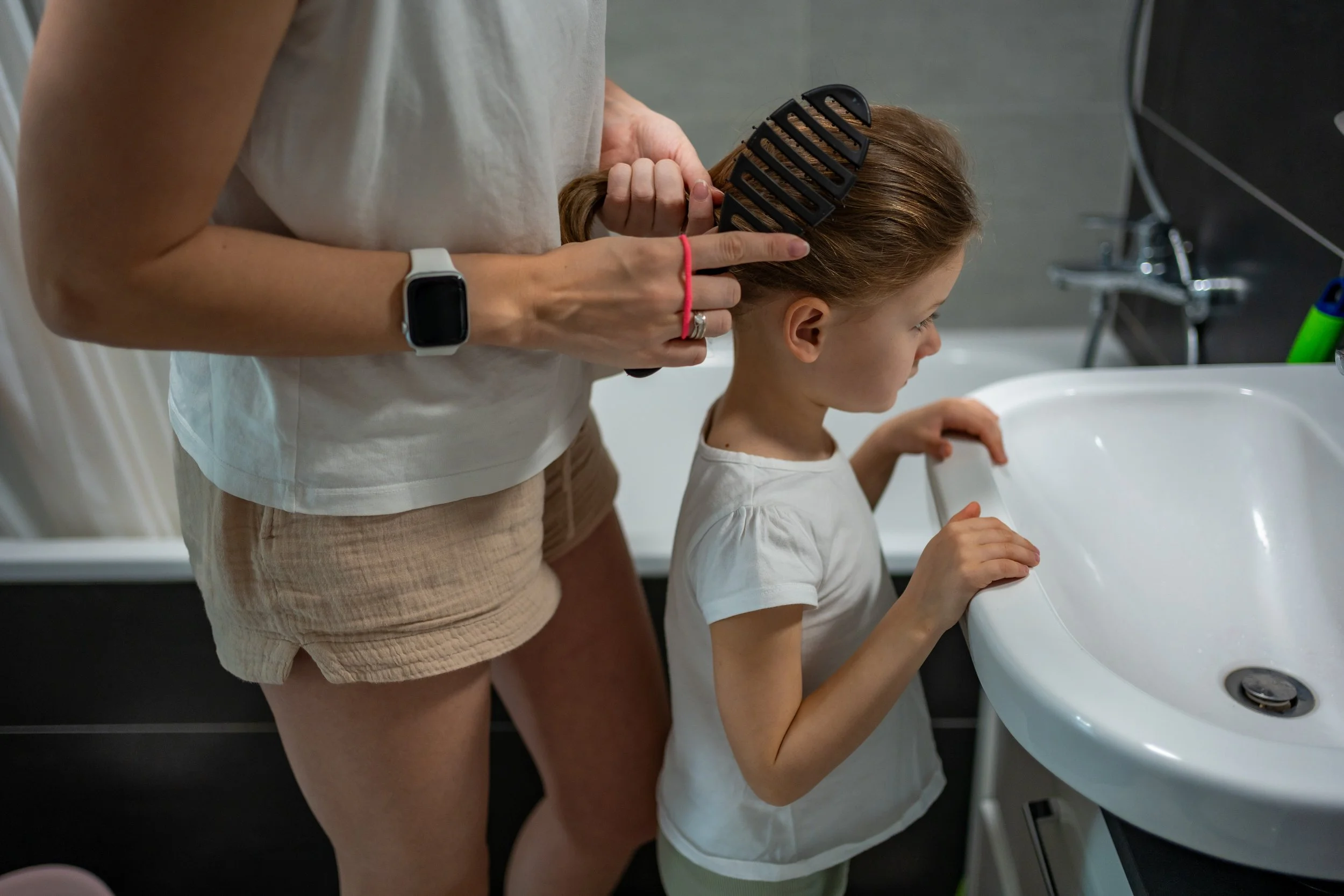
Finding lice can feel overwhelming. Especially when you’re tired, busy, or getting conflicting advice.
Take a breath. This is manageable, and you have options.
____________________________________________________________________________________________________________________
Step 1: Confirm What You’re Seeing
Not everything that looks like lice actually is lice.
• Live lice move quickly and are tan to brown in color.
• Nits (eggs) are tiny, oval, and firmly attached to the hair shaft — they do not flick off like dandruff.
• Dry scalp, product buildup, or lint are often mistaken for lice.
If you’re unsure, a careful scalp check under good lighting is the first step before starting treatment.
Step 2: Pause Before Using Over-the-Counter Treatments
Many families reach for drugstore lice treatments right away — but it’s important to know:
• Many lice are now resistant to common OTC products
• Repeated use can irritate the scalp without fully solving the problem
• Improper timing or technique often leads to reinfestation
Treatment works best when it’s paired with thorough combing and proper follow-up
Step 3: Choose a Treatment Approach That Fits Your Family
There is no one “right” way — but there are more effective ways.
Options may include:
• Careful, methodical comb-out using professional techniques
• Non-toxic oil-based treatments paired with correct timing
• Education on follow-up checks and prevention
• Professional in-home support for families who want guidance or relief
What matters most is consistency and knowing exactly what to do next.
Step 4: Avoid Over-Cleaning Your Home
Lice live on the scalp, not in your house.
Helpful steps:
• Wash bedding, hair ties, stuffies and other garments that touched the hair and was used in the last 48 hours
• Dry items on high heat
• Place unwashable items in a bag for 48 hours
You do not need to:
• deep clean your entire home
• spray chemicals on furniture
• throw away stuffed animals
Over-cleaning causes stress and rarely changes outcomes.
Step 5: Make a Plan, and Stick to It
The most common reason lice persists is incomplete follow-up.
Successful treatment depends on:
• thorough initial combing
• repeat checks at the right intervals
• completing all recommended steps
Having a clear plan prevents the cycle of treating, worrying, and starting over.
When to Get Help
If you’re feeling stuck, unsure, or exhausted — you’re not alone.
Some families choose professional help to:
• confirm lice accurately
• ensure nothing is missed
• reduce stress and time spent combing
• receive clear education and reassurance
I’m a local nurse and mom, and I provide calm, in-home lice treatment and guidance for families who want support through the process.
If you have questions or want help deciding next steps, you’re welcome to reach out.